When Industrial Robots Are Wrong: Risk, Trust and Control
Manufacturers are automating faster, but robot errors still raise questions about trust, escalation and accountability. Here is what production teams and welding cell integrators should address.
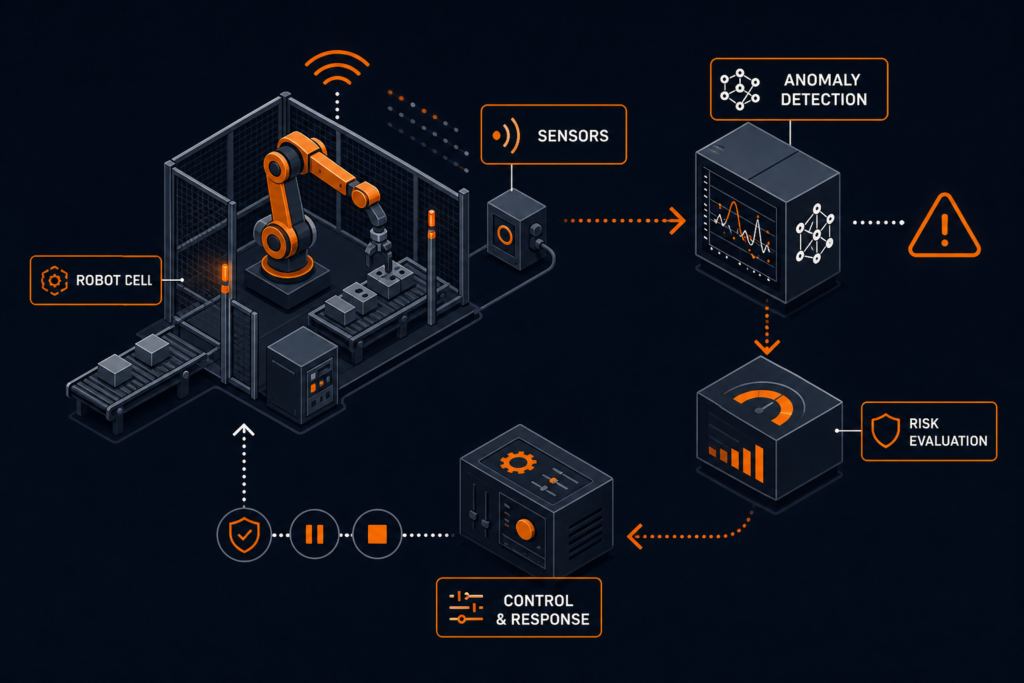
An opinion piece recently published by Robotics & Automation News asked a practical question that many factories still avoid until a line stoppage or quality escape forces the issue: what happens when the robot is wrong? The question matters because industrial automation is usually evaluated through cycle time, uptime and labour efficiency, while the human response to a suspected robot error often remains underdefined. In production environments, an operator may notice a torch path drifting, a part seated incorrectly in a fixture, a vision system accepting a bad orientation, or a collaborative robot repeating a flawed sequence with perfect consistency. A robot can therefore meet takt time and still create operational risk if the organisation has not defined how workers challenge machine decisions, who has authority to intervene, and how the event is investigated without compromising safety or throughput.
Robot performance does not remove the need for human challenge
The core issue is not whether robots make mistakes in the same way people do, but whether automated systems can fail in ways that are harder for teams to question. In welding and assembly, repeatability can create a false sense of certainty. If a FANUC, ABB, KUKA or Yaskawa arm repeats a programmed path within specification, production teams may assume the process remains valid even when upstream variation has changed the real-world conditions. The same applies to cobot deployments from Universal Robots or Doosan, where ease of programming can accelerate adoption but does not eliminate the need for disciplined change control. According to the original article, manufacturers need clear processes that allow experienced operators to challenge suspected robot errors safely. That aligns with broader industry commentary that automation failures are often system failures involving tooling, sensing, programming, maintenance and supervision rather than a single robot fault, as discussed by Formic and TrackFuture.ai.
For production managers, this means robot governance should be treated as part of process engineering, not just machine safety. A line operator who sees a poor weld toe profile, excessive spatter, missed seam tracking correction or inconsistent penetration must have a defined escalation route. That route should include safe stop procedures, fault logging, traceability of recipe or program changes, and a review process involving maintenance, quality and manufacturing engineering. Without that structure, factories risk two opposite failures: operators ignore genuine problems because they assume the machine must be right, or operators stop the process too often because they do not trust the automation. Neither outcome supports stable output.
Standards define safety, but trust depends on procedures
European and international standards already provide a framework for safe robot integration, but they do not by themselves create organisational trust. Industrial robot systems are commonly designed around ISO 10218 for robot safety, while collaborative applications also reference ISO/TS 15066. Functional safety architecture is typically developed in line with IEC 60204-1 for electrical equipment of machines, ISO 13849 or IEC 62061 for safety-related control systems, and relevant EN harmonised standards under the Machinery Regulation environment in Europe. These standards help define emergency stop behaviour, safeguarding, interlocks, safe speed, safe limited position and restart conditions. They are essential, but they mainly answer whether a system is safe to operate, not how a factory should respond when an operator believes the robot is producing the wrong result.
That gap becomes more visible as cells incorporate vision, seam finding, adaptive welding parameters and AI-assisted optimisation. A robot may remain within all validated safety boundaries and still produce scrap because a sensor drifted, a fixture wore out, a batch of parts changed dimensionally, or a software update altered a decision threshold. Human-machine interface design therefore becomes critical. Alarm messages should be intelligible, event histories accessible, and override permissions controlled. Operators need training not only on how to run the cell, but on what abnormal process signatures look like and when intervention is justified. Factories that formalise this challenge process generally recover faster from faults and generate better root-cause data for continuous improvement.
What this means for welding cell integrators
For robotic welding and cobot welding, the implications are direct. Welding cells are especially sensitive to small deviations because arc stability, joint fit-up, torch angle, wire condition and heat input all interact. A robot can execute the programmed path exactly while the weld quality degrades due to part variation or consumable issues. Integrators designing cells for MIG/MAG, TIG or laser-hybrid applications should therefore build for controlled intervention. That includes robust fixturing, part-presence verification, weld parameter monitoring, clear HMI fault trees, and data logging that links weld schedules to part IDs and operator actions. Integrators should also consider modularity, since a system that cannot evolve tends to accumulate workarounds rather than engineered corrections, a point echoed in commentary on cobot welding system flexibility by THG Automation.
There is also a workforce dimension. Skilled welders and operators often detect subtle process drift before a dashboard does. Their judgement should be incorporated into cell design through practical interfaces, teach recovery modes, maintenance access and sensible alarm prioritisation. In high-mix fabrication, collaborative welding cells may benefit from simpler escalation logic and faster recipe verification, while high-volume automotive lines may require deeper integration with MES, quality traceability and statistical process control. In both cases, the objective is the same: prevent the robot from becoming an unquestioned authority. The best welding cells are not those that eliminate human judgement, but those that channel it safely and consistently into the automated process.
For buyers and integrators, the current debate is a reminder that robot selection is only one part of project success. Whether the arm comes from ABB, KUKA, FANUC, Yaskawa, Universal Robots or Doosan, the decisive factors often sit at system level: fixture repeatability, sensing strategy, safety validation, operator training, maintenance discipline and escalation governance. As more manufacturers pursue automation to address labour shortages and quality consistency, they will need procurement specifications that ask not only for cycle time and payload, but also for fault transparency, intervention logic and standards compliance. Companies planning a new robotic welding cell or a cobot welding retrofit can use this moment to review how their future system will handle disagreement between machine output and operator judgement.
Readers assessing these requirements for a new installation or upgrade can request a quote for a welding cell concept review, including safety architecture, process monitoring and operator intervention design suited to their production environment.
Related articles
Request a quote
Looking for a specific configuration, or want to discuss our current stock? Tell us about your project — we reply within 24 hours from our Bilbao office.